Our gender roles are undergoing a massive shift. The repertoire of roles for both men and women is in a state of continuous transformation. Our grandfathers did not iron shirts; they were not heavily involved with their children or grandchildren. The macho/hero role was far more obvious and common for them during the war and the post-war era (granted, they didn't have much of a choice). This stands in stark contrast to the desire for intimacy and connection we witness today—in an era where the white, heterosexual man is blamed for the world's catastrophes, condemned to guilt by the culture of the global village, leaving the individual, the man, locked inside himself.
This change requires immense inner work. This inner work is not always easily or effectively communicated. It is not clearly visible, partly because the intention and the process itself remain hidden; a large part of the feelings experienced (such as shame, searching for and identifying one's self-worth) is uncharted territory, difficult to articulate, and we receive no help. This applies to women and men of any age, whether they live in the countryside, a town, or a metropolis. We are all caught up in this strange current.
In my view, David Szalay’s novel Test (published in English as Flesh) is a masterpiece of this transition—a book everyone should read, because it serves as a true guide in this chaos. The title page alone stirs confusion. We are in a global village: David Szalay—Hungarian, foreign, ours, not ours? How does that work? Where are we? For us Hungarians, the reversal of the first and last name can feel alien, while for foreigners, the name Szalay might be unfamiliar. We are in a global village.
The English title is Flesh. The Hungarian title, Test (Body), does not fully capture the meaning of the English word. Flesh does not merely denote the body, but rather tissue, muscle, the physical substance of an animal body, or even the soft, juicy pulp of a fruit. Furthermore, flesh implies not only the frailties of carnal desire (flesh-and-blood), but also hints at kinship and family (in the flesh: in person, in reality; to put meat on the bones / to flesh out: to develop or give substance to something). Szalay masterfully "fleshes out" the inner worlds of his characters; what takes place in the book is the filling out of the body, of the tissue, much like the painting of an abstract piece—Malevich and Rothko come to mind.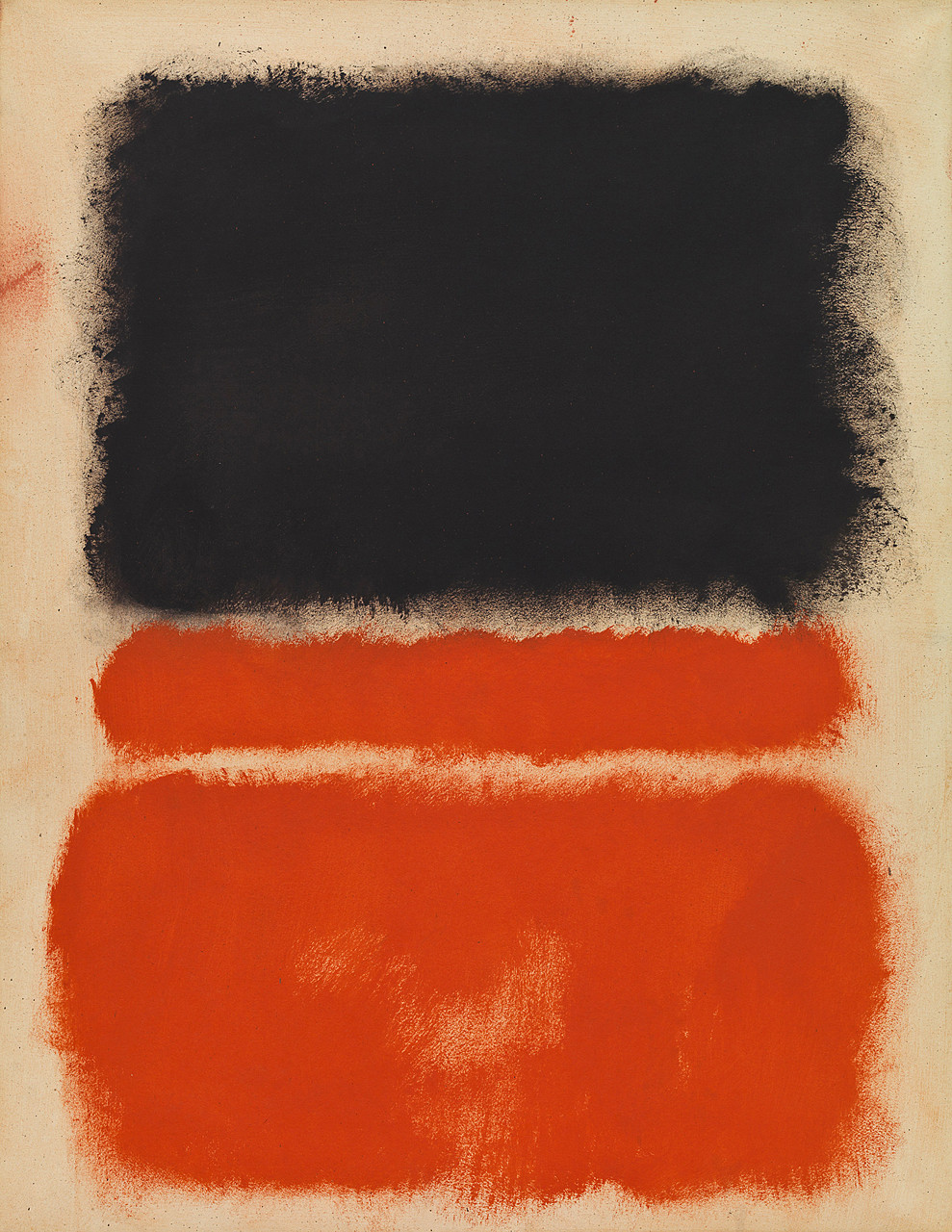
And things get even more complex because, in pronunciation, Flesh sounds very similar to Flash. A flash means a sudden burst of light, and in this book, from the very first sentence, this flash can signify the sudden intrusion of past traumas. While one side represents raw meat, exposure, and vulnerability, the Flash is a fraction of a second: a sudden realization, or the abrupt, vivid intrusion of past traumas, failures, and anxieties into the present.
What is that first sentence? “At the age of fifteen he moves to another city with his mother and starts at a new school.” This is the first sentence we learn about István, the Hungarian cosmopolitan, and it immediately lulls us into an almost hypnotic state. And we remain in this submerged state throughout the entire reading of the novel. Is there anything more traumatic for a fifteen-year-old boy than losing his previous connections, relatives, and friends, and in a sense, starting a completely new life? The flash appears right here, as a painful re-emergence of past experiences and memories.
But let us examine what the body, the flesh, and vulnerability truly mean. Our body exists in a threefold role:
1. The Body as Object (The perceived and utilized body)
The body is a physical and material reality. On one hand, it is the instrument of our own will and actions, through which we execute our intentions in the physical world. On the other hand, it is inevitably the object of others' gaze: to the outside world, it is a visible, judgeable, vulnerable surface that carries societal expectations, aging, or desire. The sex scenes in the book—superbly written—perfectly capture this tension between the perceived and the acting self. An erection is simultaneously an expression of vulnerable desire and an instrument of exploration and pleasure.
2. The Body as Subject (The sensing and resonating body)
The body as the center of perception. It is not merely a biological machine, but a continuously open sensory receptor in perpetual contact with its environment. It absorbs, decodes, and translates the stimuli, affects, and subtle signs of the outside world—it is the primary filter of our experiences and inner life. When István falls in love, he expresses his feelings explicitly through this word—perhaps only to us, the readers of the book. For, on one hand, we see him constantly, making him vulnerable to our gaze as well, and on the other hand, we witness how he thinks along the lines of his bodily experiences. We know that this love will be experienced and named after, and by virtue of, the many joyful sexual experiences he had with his later partners.
3. The Body as Agent (The active and shaping self)
The body as the vehicle for self-expression and autonomy. This dimension is the active self, capable of creating change, moving through the world via the body. It does not merely endure or perceive reality; it actively shapes it, makes decisions, defines boundaries, and achieves self-actualization.
This trinity fits Szalay’s Flesh brilliantly: it is precisely these three dimensions that come into conflict within the novel's characters. The characters frequently lose control of the Agent (the active self) because their body as Object (the declining, longing flesh sized up by others) or as Subject (the body suddenly perceiving/admitting anxiety and trauma) takes over.
This threefold nature is present in the book's very first sentence (and in the final sentence too, which, of course, I will not reveal here). A monumental virtue of the book is the flawless logical progression of the narrative. Every step follows from the previous one; we move from one step to the next, creating a logical story—a structure that makes vulnerability and the resulting shame inevitable. We smartly perceive the signs of the world, try to interpret them well, plan our responses and reactions, deduce the consequences of our actions, and plan accordingly. Yet, there are situations where we completely lose control (unexpected, unforeseeable tragedies, sex, violence stemming from sudden, overwhelming anger and frustration), and once control is regained, we try to live normally again.
This tension, vulnerability, and compulsion are present throughout the book. There is a superb illustration of this problem that I feel can be shared. In order for István, the protagonist, to secure a specific position, enter higher social circles, and earn more money, he must first learn to eat more slowly. We can almost feel how the trinity of his body (Object, Subject, Agent) clashes; planning emerges, suffering emerges, and the question of power arises. Who is it that actually controls our most elemental bodily need? István? The friend who teaches him out of goodwill? Society? Or the absent, yet strictly judging "upper circle"? A masterful illustration.
Flesh is a Hungarian novel, much of which takes place in Hungary—and although it is never explicitly named, it most certainly unfolds in Pécs. Yet, the issues it tackles could just as well play out in Germany, Scotland, or Australia. We are in a global village. Even if one relocates to England, the periphery remains, even when chauffeured in the back of an elegant car through a part of London that can hardly be called peripheral. The book is Hungarian not only because a large part of it is set in Hungary, but also because it follows the traditions of two major Hungarian literary figures: Imre Kertész and Ágota Kristóf.
David Szalay—this deeply sympathetic figure who, in my opinion, was born for stardom—views himself as someone who is neither Canadian, nor British, nor Hungarian. Like a ghost, he is everywhere, yet truly present nowhere. He describes himself as a backwater. The inner world of this backwater is magical. Unique, artistic, interesting, and deeply moving. I view him almost as a brother.
I look at him as a brother, as a father, because I am a father too. The strongest scenes in the novel are his conversations, encounters, and failures with his son, Jacob. In Jacob, as all fathers do unconsciously, István sees himself—the chance to make their shared destiny better. But if this attitude—the desire to control one's own destiny through the male child—overwhelms the father, the child is instantly left alone and feels abandoned. Because the father sees his own childhood self in the child, rather than the child himself. How many fathers have I seen doting on their sons with a smothering love, leaving the child completely bewildered, unable to understand this misattuned situation where the father desperately wants to give his child the love he himself never received. István walks a tightrope in his relationship with Jacob. The question echoes within us throughout: where is István’s own father? How heartbreaking it is to see how little István has to hold onto regarding his own role as a father.
Why do I recommend this book? As a man and a father, many of the book's scenes and dilemmas are intimately familiar. The way István desperately longs for that sustaining connection where he can finally be himself, yet remains on the outside of this desired relationship despite everything being in place to experience it. The experience of reading this book directed my attention back to my own body. In my body, I felt the anxiety, the tension, the loneliness, the exclusion, the urge to conform. The climax of the book—which is, once again, about the Flesh, about how the Flesh expresses what the Flash leaves behind: a core experience felt not by the character, but perceived by his surroundings—brought me to tears.
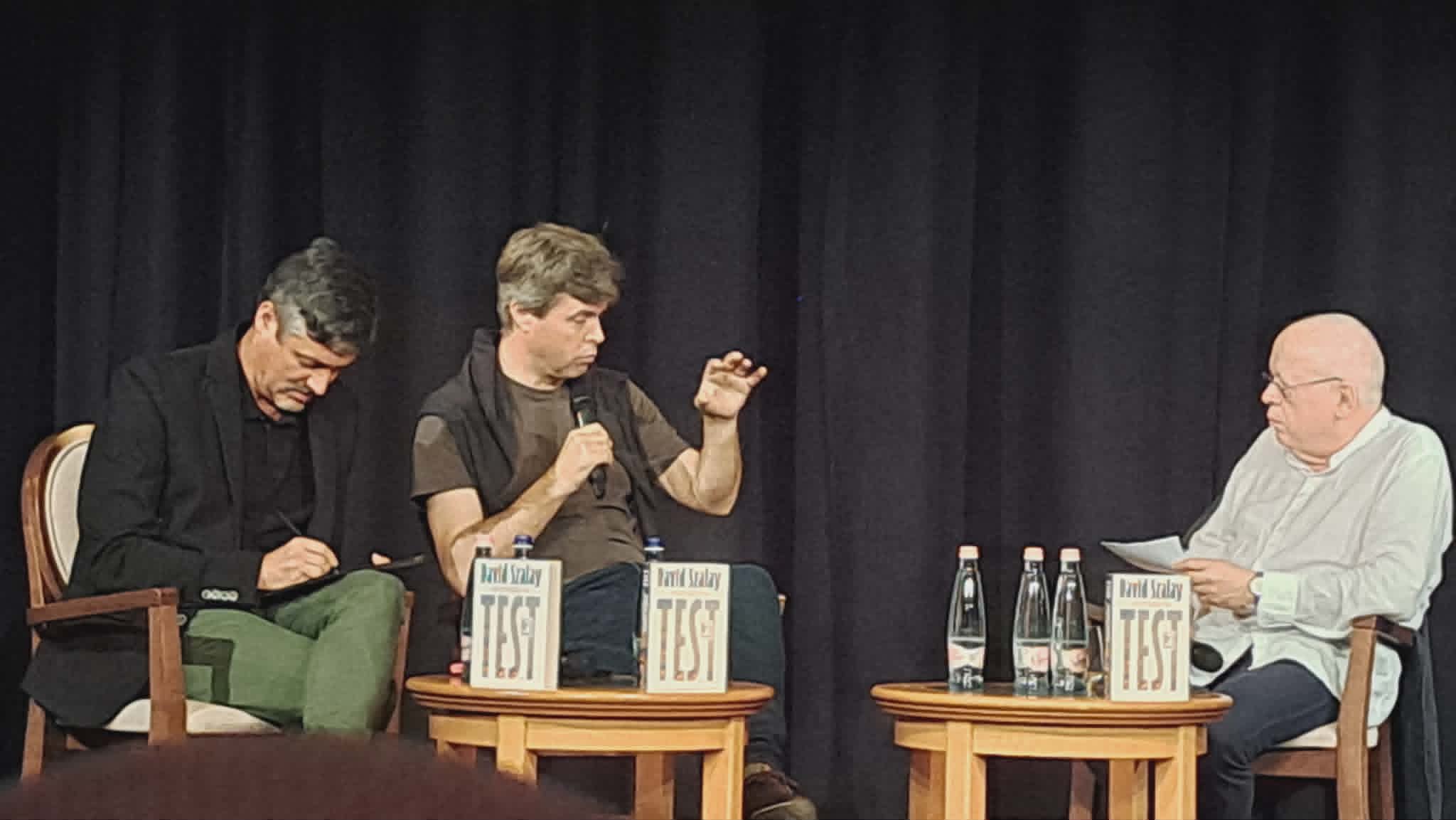
I do not know how far Szalay, the backwater and the ghost, is identical to István. His photograph is there in the book, on the back cover. I won't deny that throughout the novel, I imagined István looking like Szalay. Did I like István more because of this? I don't know. During a panel discussion at the National Book Week, Szalay said that he wrote everything he knew about István. This is certainly true. For Szalay, István is both close and distant—and he is the same for us. Distant and close. In a distant closeness, just like all of us are: from each other, and from ourselves.
THis pickture is not a backwater, but it might reflect the essence of this article.